Explore engineering, innovation and local history at the site of the world’s first tunnel built beneath a navigable river.
Our school visit offer is self guided, giving teachers and pupils the freedom to explore the Museum and its surroundings through structured activities designed by our team. Sessions are carefully developed to provide independence, clarity and purposeful learning.
For full practical guidance including travel information, lunch arrangements, accessibility details, safety information and cancellation policy, please read our: School Visit FAQ. ←
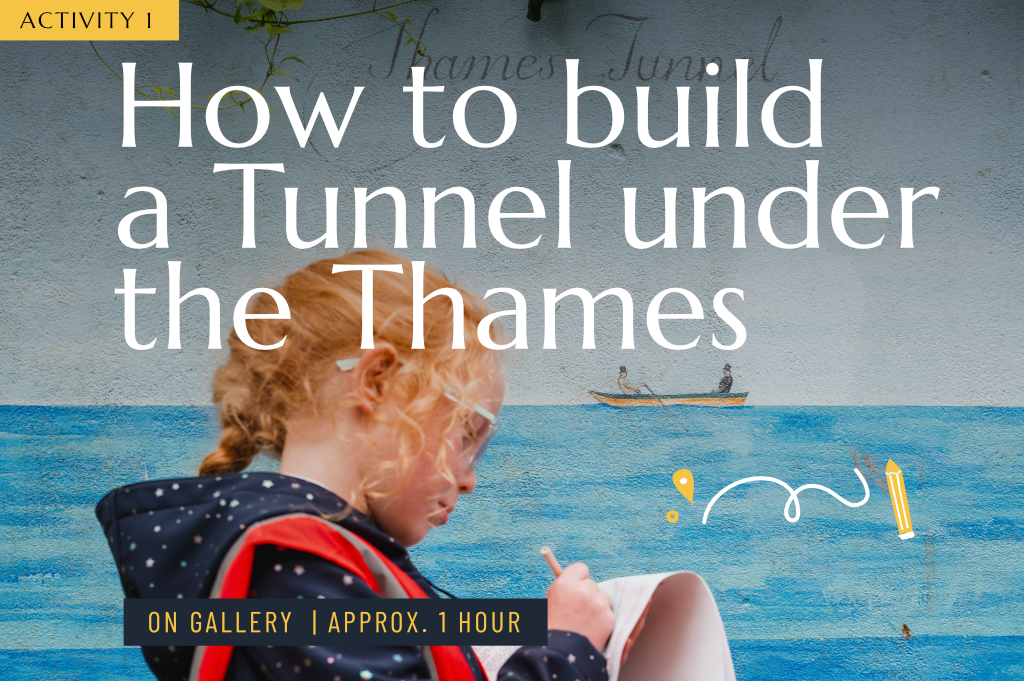
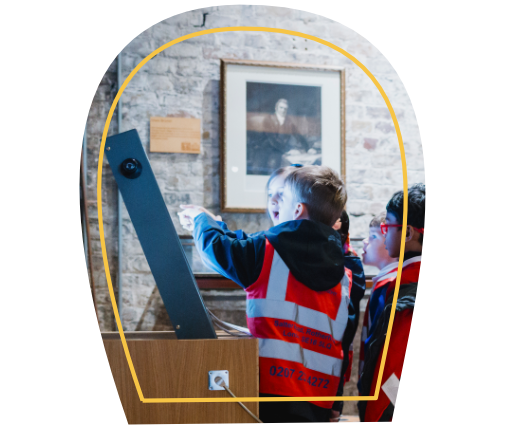
A structured engineering investigation inside the Museum. Pupils:
• Explore the story of the Thames Tunnel
• Examine engineering challenges and solutions
• Investigate materials and design ideas
• Respond to guided prompts and tasks
• Work collaboratively to solve problems
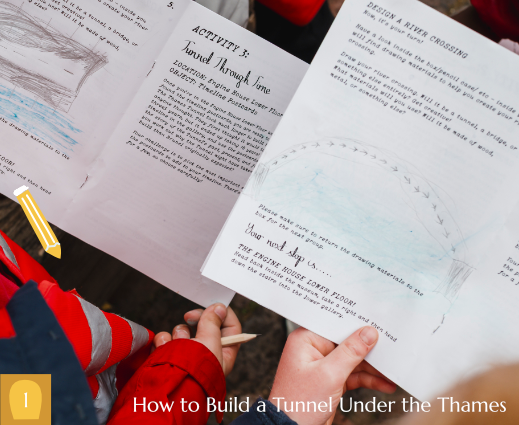
Each pupil receives an individual activity booklet to guide their learning.
Teachers lead the session using clear Museum developed guidance.
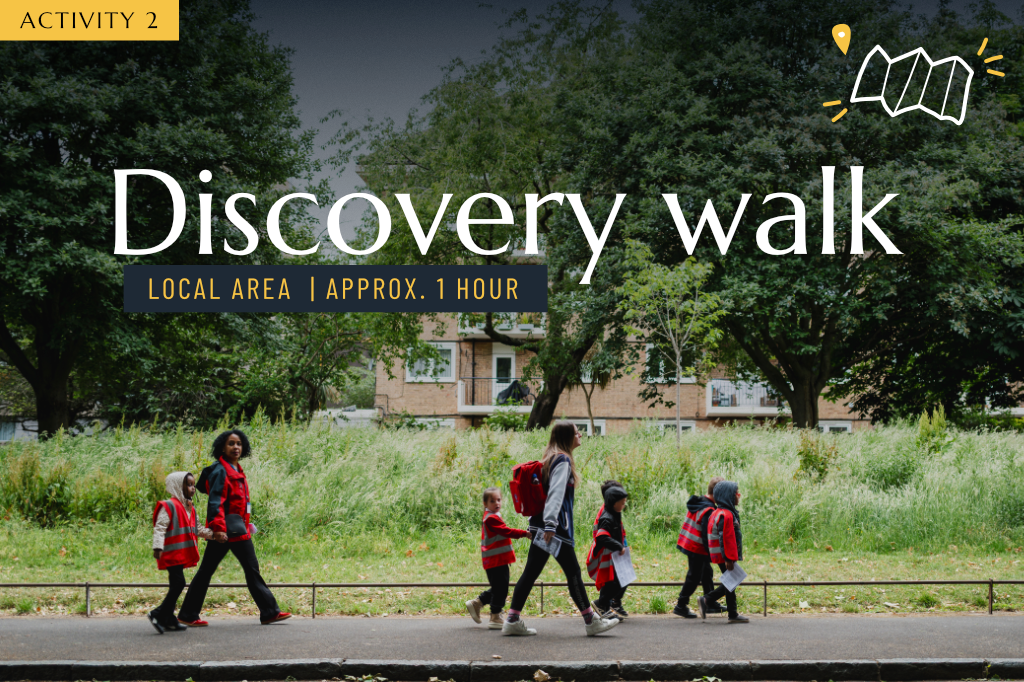
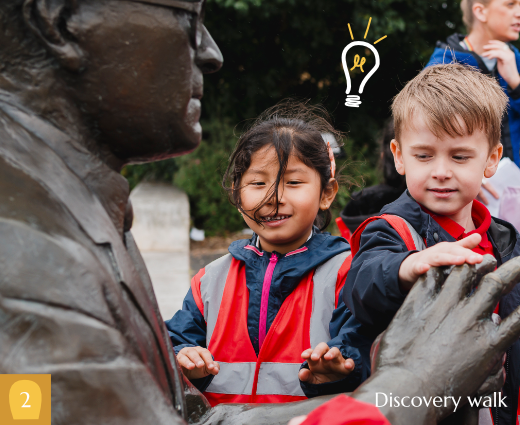
Discovery Walk
Local area | Approx. 1 hour
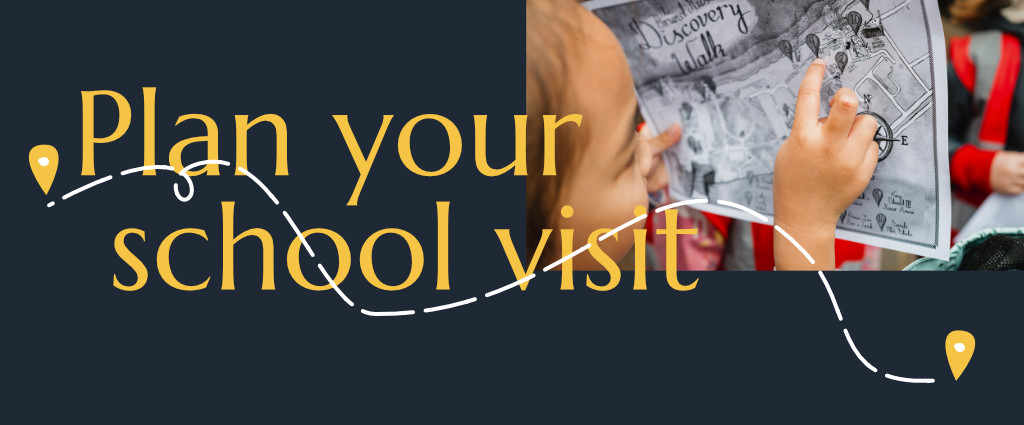
A structured local history investigation around Rotherhithe. Pupils:
• Observe and interpret features of the local environment
• Explore themes of industry, transport and urban change
• Respond to guided observation and discussion prompts
• Connect past and present within the landscape
The walk takes place on public paved routes. Pupils are provided with a map showing clearly identified stations to follow. Teachers are responsible for pupil supervision throughout.
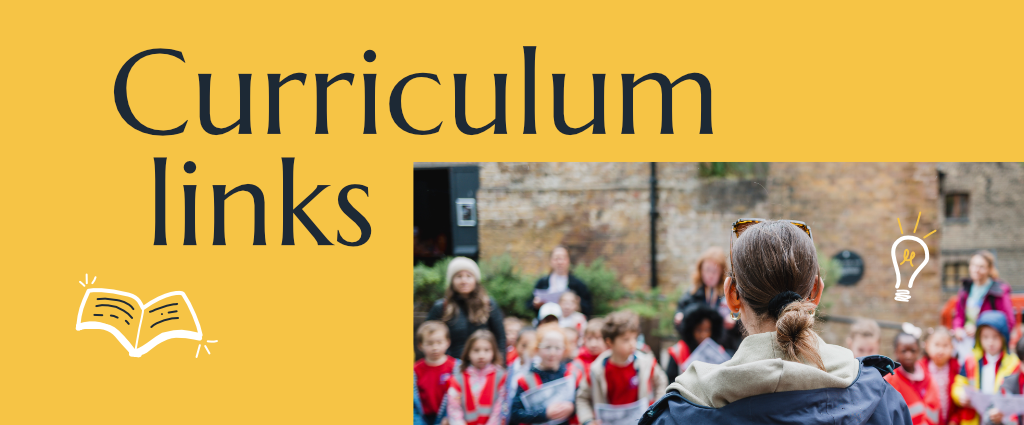
Curriculum Links
Our activities support learning across key stages.
Sessions promote analytical thinking, collaboration and applied reasoning.
KS1 to KS2
• History Significant individuals and local history
• Science Materials and investigation
• Geography Local area study
• Design and Technology Structures and problem solving
KS3 to KS4
• Industrial Revolution
• Engineering and technological innovation
• Social and local history
• STEM pathways
• Design and Technology
Why Visit?
A visit to the Brunel Museum enables pupils to:
• Investigate real nineteenth century engineering challenges
• Explore the Industrial Revolution in a physical setting
• Study a significant local historical site
• Develop observation, reasoning and collaboration
• Connect classroom learning to a real place
The experience is focused, manageable and suitable for both primary and secondary groups.
Capacity: Maximum two classes, up to 60 pupils in total, per day.
Three classes must be split across two days.
Adult to Pupil Ratios
• Early Years 1 to 4
• Year 1 to 3 1 to 6
• Year 4 to 6 1 to 8
• Year 7 and above 1 to 15
Please notify us in advance of any SEND or additional support requirements.
Visit Length
One activity approximately 1 hour. Both activities 2.5 to 3 hours including transitions.
For full practical guidance including travel information, lunch arrangements, accessibility details, safety information and cancellation policy, please read our: School Visit FAQ. ←
Ready to Book?
If you are ready to book, please complete our online booking form.