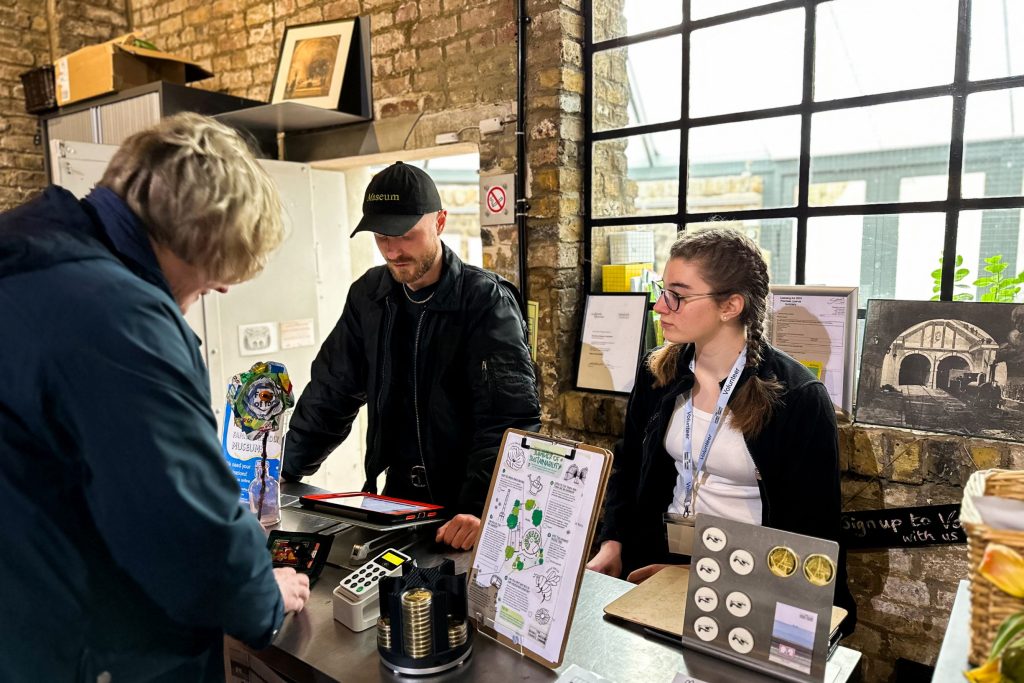
The Brunel Museum hosted four five-day First Steps to Work placements, taking place in February, April, May and July 2026, involving a total of six secondary school students. Funded by GEM’s Inclusive Pathways Action research, the programme was coordinated by our Learning and Engagement Producer and designed to give young people meaningful, hands-on experience of working in a small independent museum.
During each placement, students were introduced to the different areas involved in running the Museum and worked alongside members of the team. Rather than simply observing, we aimed to give participants practical tasks and opportunities to contribute their own ideas. They gained insight into areas including learning and engagement, visitor experience, collections, operations and communications, while also having opportunities to produce creative work reflecting their experience and individual interests.
A key milestone has been the growth of the programme beyond our original expectations. We initially anticipated supporting 2–3 pupils, each attending for at least five days, but ultimately welcomed six students across three placements. This demonstrated both the demand for meaningful work experience opportunities locally and the Museum’s ability to provide valuable placements within a relatively small organisation.
One of the most important successes has been seeing the impact on the young people themselves. Participants developed a better understanding of the range of careers that exist within museums and heritage, while gaining practical workplace experience, confidence and transferable skills. Working within a small team meant that students could experience different aspects of museum work and understand how staff collaborate across different areas. At the same time, the Museum benefited from their perspectives, creativity and ideas, helping us consider how our organisation and its stories are perceived by younger audiences.
The July placement also created an opportunity for some of our work experience students to take an active role in the Kids in Museums Takeover Day activity. As part of the project, they recorded an interview reflecting their perspectives and experience, which will be shared in November. This provided a particularly valuable opportunity for the students to contribute to a wider national initiative and create something with a life beyond their placement.
The project also presented some useful challenges and learning. Our original approach was largely based around working with schools to provide placements during their established work experience periods. Through delivery, however, we realised that young people’s needs and circumstances are much more varied. Some students required opportunities at different points in the year, and a rigid model would have limited who could participate. We therefore adapted the programme to be more flexible and responsive to individual students, while retaining the structure and purpose of the placements.
Our Learning and Engagement Producer’s strong knowledge of the local community and existing relationships with schools, families and community networks has been particularly valuable in identifying opportunities and responding to students’ needs. This more personalised approach has helped us understand how First Steps to Work can complement traditional school work experience while reaching young people who may otherwise have fewer opportunities to access the museum and heritage sector. As a result of this project, we’re working on sharing knowledge with the wider sector around how to engage different groups of young people and provide genuinely meaningful work experience, including on 12 November 2026: GEM Inclusive Pathways Dissemination Event – GEM