
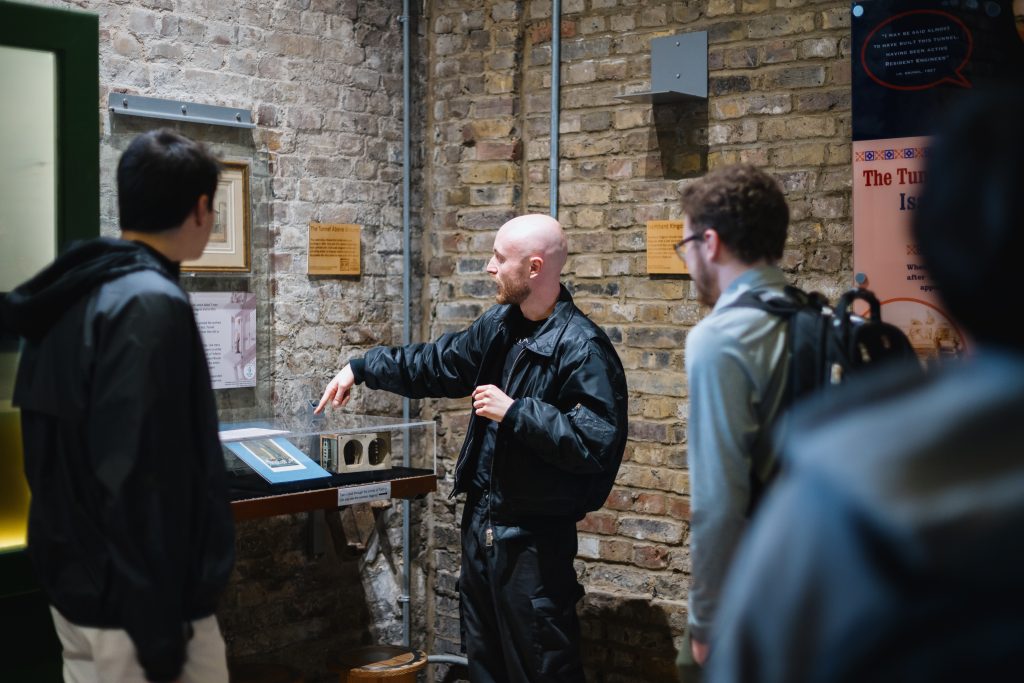
A new display for the Museum Groundbreakers: The Intrepid Men who built the Thames Tunnel (17th April to 30th August) explores the labour behind one of London’s most significant engineering achievements. While Marc and Isambard Kingdom Brunel are widely remembered for the Thames Tunnel, the display highlights the hundreds of miners, bricklayers, carpenters and blacksmiths who made the project possible. Through stories and objects, visitors are introduced to the people who worked in difficult and often dangerous conditions beneath the river as they reflect on the human effort behind the fabric of the city.
The display is built on the research conducted as part of the Workers Project. Over a series of workshops, a small group of people with experience of trades or construction work, explored the lives of historic workers, who they were, what they achieved, and the reality and dangers of their working conditions.
Coinciding with the May Bank Holiday, Tunnellers’ Tales (23rd to 31st May) invites parents and their little ones to step into the world of the Victorian tunnellers. Designed for children aged seven to eleven, this interactive drop-in experience explores what life may have been like working beneath the Thames through touch and storytelling.
Workers Project
Evaluation by The Audience Agency
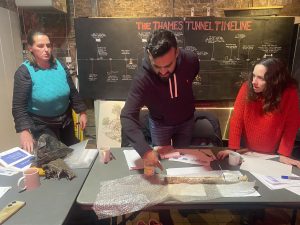
The Workers Project was designed to actively involve and collaborate with people who have been traditionally underrepresented in the Brunel’s audiences, introducing new voices into the work of the Museum. The project focused on uncovering and platforming the overlooked stories of working-class people who built the Thames Tunnel.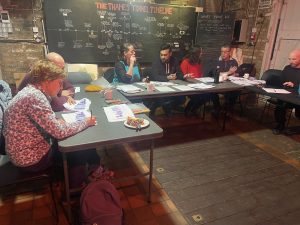
As a legacy of the Workers Project the Museum launched its Groundbreakers display in April 2026, and one of the project participants gave a talk at the Research Forum.
The aim of the Workers Project was to involve active construction workers in the co-production, and benefitted from tunnel engineers joining the project – the combination of construction and tunnelling experience was a significant strength and fostered diverse discussions during project sessions.
The project lead mapped out the overall direction of the project across a programme of eight sessions, but took a flexible approach which allowed space for co-production, responding to the group dynamic, the evolving research, and the changing goals of the project. This ensured that each session remained relevant, responsive, and grounded in the participants’ input.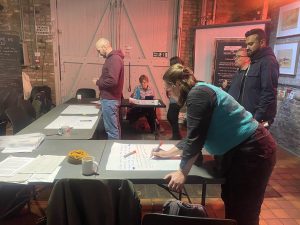
The group worked together well, and they proposed a set of key messages around the way they wanted visitors to interact with the histories they uncovered through their research. This included:
- Emotional responses, to inspire new thinking about the Thames Tunnel and workers’ roles in building the world around us.
- Thought provoking narratives to help visitors envisage the Thames Tunnel workers as rock hard, working hard to overcome challenges and persevere in the face of hardship, to see all workers as making a contribution to the Thames Tunnel, to understand their pride, and to imagine their working class comradery.
- Learning and discovery about the large number of Thames Tunnel workers, including children, who worked long shifts in dangerous and sometimes fatal conditions; how their unique experience of digging the first ever tunnel under a river bonded them and made them proud; and how the workers were motivated to go on strike and stand up for their rights because of their working conditions, despite having very little power or recourse to effect change.
The participants also considered different mechanisms and formats for sharing these stories with visitors, including traditional methods (objects, visuals, and text), audio visual elements (including video, audio guides, and projects), and outdoor interpretation (outdoor displays, installations, and sculptures).
The project evaluation demonstrates that the participants found their experience of the project to be both personally rewarding and a great learning opportunity. The group dynamic was positive and productive, and at the end of the project all of the participants said that they would gladly return in the future if invited.
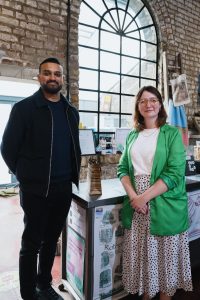
Participant feedback – illustrative quotes
[I’ve gained] understanding of the real problems faced both by the engineers, architects and the labourers for this amazing feat of engineering.
[I want to] feel like I’ve done the workers justice and told their stories in the right way.
[I want the impact to be] more working-class histories and appreciation. Not just negative and sympathetic but about achievements. Celebratory that gives recognition to the whole team.
The project is like history therapy.
My experience with tunnels was only as a labourer- I am enjoying learning a lot more about the project.